
Ø135 · Ø160 · Ø200
Three catalogue internal diameters for straight fireclay liners.
Chimney systems
VULCO UNIVERSAL combines a fireclay liner, insulation and an outer structural block. Catalogue sections are Ø135, Ø160 and Ø200 mm, with straight, connecting and clean-out elements.
Short answer
A fireclay chimney liner is the refractory inner passage of the system. The Volcano catalogue lists VS liners in Ø135, Ø160 and Ø200 mm, 330 mm high with a 25 mm wall, VST 90° connecting tees, VSB clean-out elements and VSJ jointing compound. Final selection depends on the appliance, fuel, temperature, condensate, height and chimney route.
Three catalogue internal diameters for straight fireclay liners.
Pipes, refractory materials and chimney inspection in one conversation.
Send basic data and photos for an initial assessment and quotation.
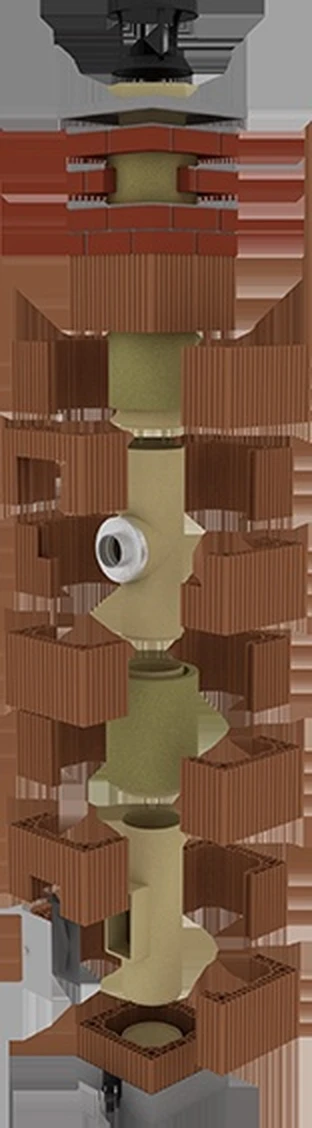
VULCO UNIVERSAL
The VULCO system in the Volcano catalogue combines a refractory fireclay liner, thermal insulation and a load-bearing outer casing. It is intended for naturally draughted appliances, with the section selected to suit the appliance and project.
Diameter is not selected from the opening alone. Appliance output, fuel, height, route, condensate and draught must be checked as one system.
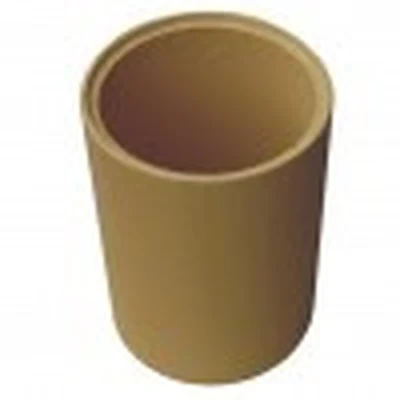
330 mm high, 25 mm wall; half-groove connection with jointing material.
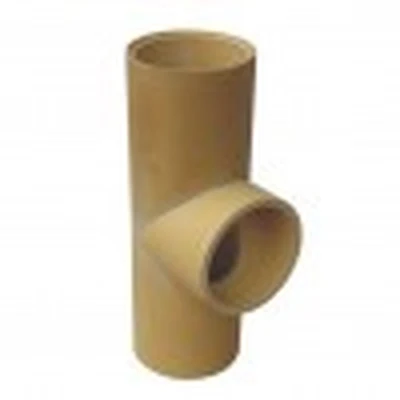
660 mm high; the connection matches the liner internal diameter.
The clean-out element has a 130 × 260 mm opening. VSJ jointing compound seals the half-groove between liners.
CATALOGUE DIMENSIONS
Catalogue data is consolidated in the Revision 2026 review. Current availability, system DoP/certification and selection for the specific appliance are confirmed before quotation.
Diameter matters, but it is not the only criterion. A poorly matched pipe can contribute to weak draught, condensation, smoke spillage and unstable appliance operation.
These terms are often used interchangeably, but they do not always describe the same part of the system. We match the proposal to the actual use rather than only the search term.
A chimney is more than a pipe. Connections, lining, insulation, combustion chamber and operating conditions all affect safety and durability.
A straightforward process
Appliance, fuel, diameter, approximate dimensions, location and photos.
We review the application and determine whether an on-site inspection is needed.
You receive a clear product proposal or the next service step.
A faster technical response
You do not need specialist terminology. Send whatever information is available:
FAQ
Clear answers to the questions customers ask most often.
Diameter should not be selected only by the available opening. The appliance outlet, capacity, fuel, chimney height and route, temperature and appliance manufacturer guidance all matter.
Not necessarily. Fuels create different flue-gas temperatures, compositions and condensate levels, so the material and system design must match the actual conditions.
Relining may be possible, but it depends on the existing passage, height, route and condition. An inspection or good photo documentation is the first step.
Photos and basic measurements are often enough for an initial assessment. If safe and accurate selection requires more data or a site visit, we will state that clearly.
Call or send photos and basic measurements. We will respond with a concrete next step.
Send an enquiry